
Resource center
Specify With Confidence.
Practical guides on construction, thickness, finishes, materials, and sourcing for commercial cake-board programs.
Solid Board vs. Corrugated Cake Boards
How the two constructions differ and what to ask when specifying.
Read GuideSpecificationHow to Choose Cake Board Thickness
Matching thickness to cake size and application.
Read GuidePresentationCake Board Finish Guide
Gold, silver, white, black, and when to use each.
Read GuideMaterialsRecycled Paperboard: What Buyers Should Know
Substrate versus surface, and what documentation to request.
Read GuideSourcingWholesale Cake Board Buying Guide
Planning volume, sampling, and recurring supply.
Read GuideProductionHow Merry Boards Are Made
Our manufacturing partner, process, and U.S. support.
Read Guide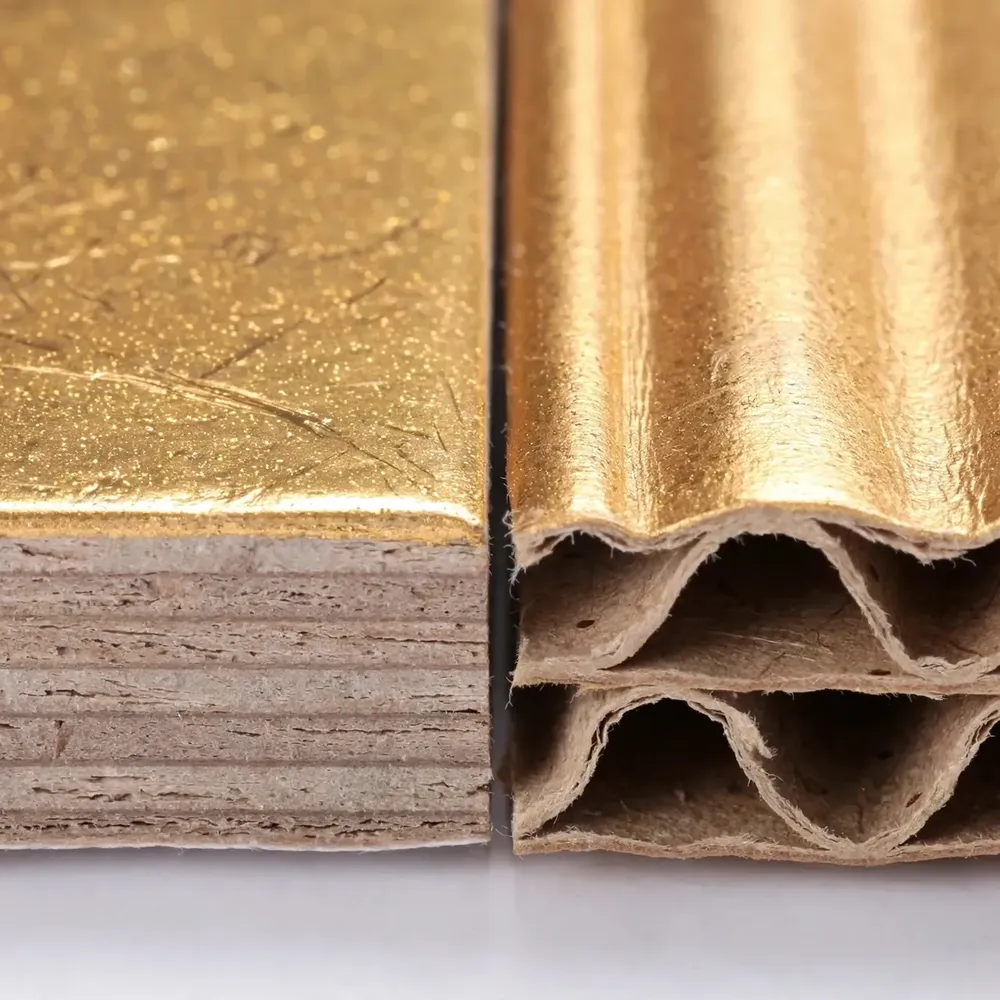
Solid Board vs. Corrugated.
Both constructions are used in bakery packaging. The difference is in the structure.
Solid paperboard is a dense, continuous board with no flutes or internal cavities. It produces a thin, clean edge and a flat surface beneath the cake.
Corrugated board uses a wavy fluted medium between two liners, creating hollow air channels. The fluting is often visible at the cut edge.
What to ask a supplier: board construction, thickness and grammage, edge finish, and whether specifications are confirmed against approved samples.
This comparison describes construction only. Suitability for a given cake should be confirmed for each application.
Wholesale Buying Checklist
Use this list to prepare a request that gets accurate pricing on the first pass.
Define your SKUs
Shapes, sizes, finishes, and handle formats you use today.
Estimate volume
Quantity per order and estimated annual usage per SKU.
Set requirements
Thickness, packaging configuration, and delivery destination.
Sample first
Confirm fit and presentation before committing to volume.
Plan replenishment
Agree on order cadence and delivery timing.
Questions About Specifying?
Our team can help you choose the right boards for your program.